
Scene-first planning
The story plan shapes the key moments before the illustrated tale is generated.
Format
Comic-style tales are useful when a family wants a highly visual story with clear scenes, a simple flow, and a finished reader view panel by panel.
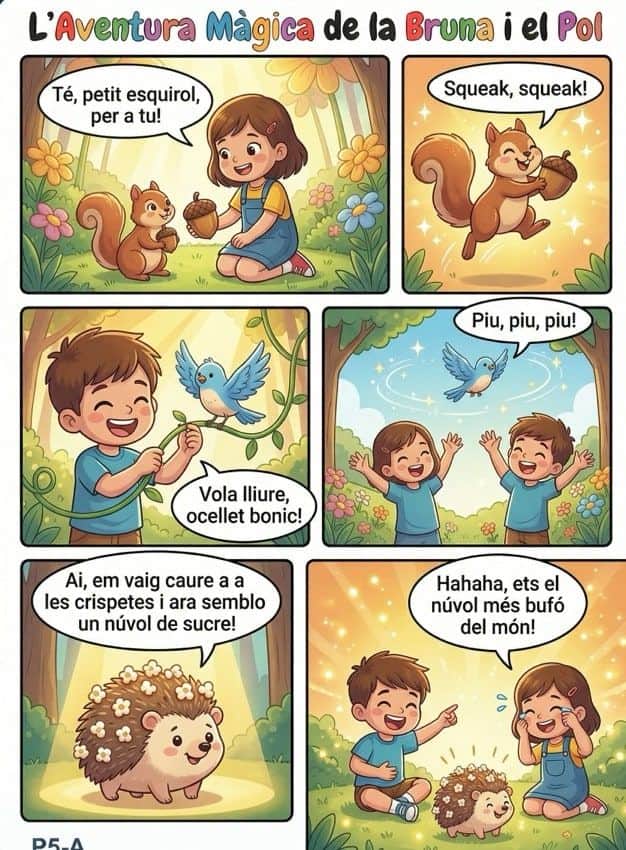
This format suits children who connect with pictures more than long blocks of text, including reluctant readers who lean in when they can see what is happening in each scene. If comics already go down well at home, a personalized one starring your own character is a natural way to make reading feel inviting.
A good comic for kids leans on visual beats: a few words per panel, one clear action per scene, and a thread that keeps moving without getting tangled. That is why Tale Island starts with scene-first guided planning, where you arrange the key moments before anything is generated and can adjust the direction while it is still just an idea.
Once the structure fits, you generate the comic-style tale with its illustrations and save it to your account. The companions you create can be reused across new adventures, so the same cast can headline more comics. From there the finished tale opens in a reader that supports sharing and remixing from a public link.
The story plan shapes the key moments before the illustrated tale is generated.
Finished tales open in a reader that supports sharing and remixing from a public link.
The comic format gives more weight to images and scenes, with a few words per panel, while the illustrated reading format leaves more room for text.
Often, yes. The visual pacing and short lines help the story land quickly and can invite a child to keep reading.
Yes. Guided planning helps you arrange the key moments before the illustrated version is generated.